High-Definition Sharing: How to Send Large 4K Videos from Android to iPhone
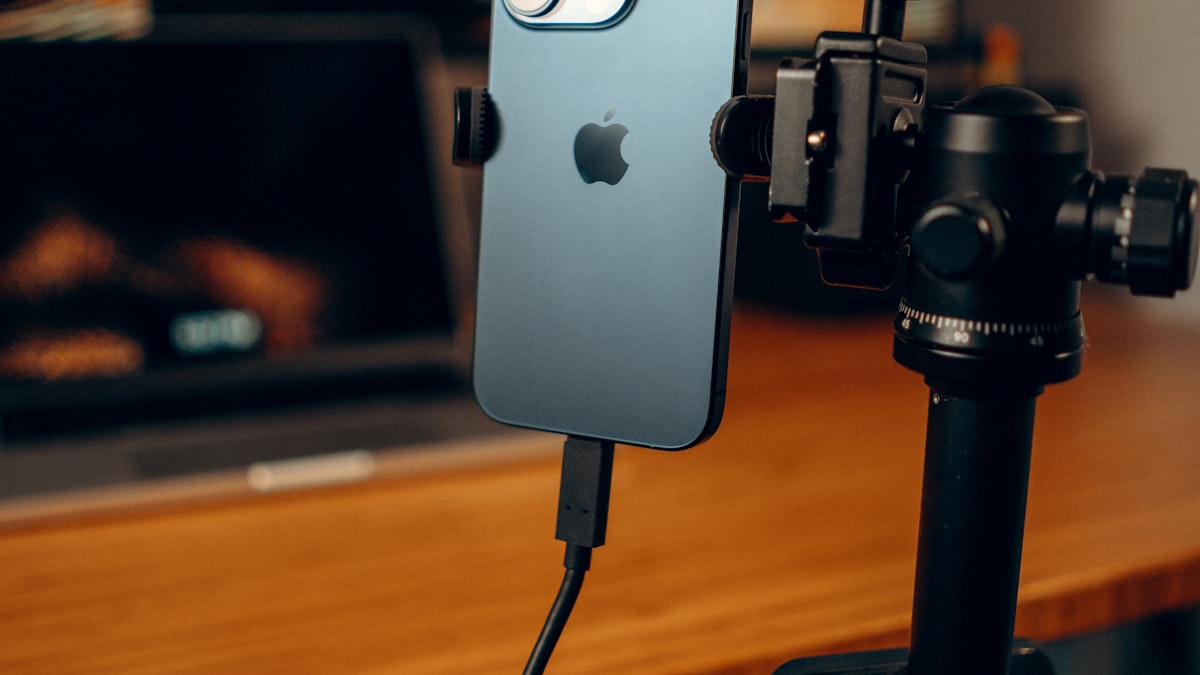
A single minute of 4K video from a modern Android phone can easily exceed 500MB. When you try to share that with an iPhone user via WhatsApp or email, the file is either rejected or crushed into a low-resolution version that looks terrible on a Retina display. If you want to move high-definition video without losing a single frame of detail, you need a strategy that bypasses standard mobile compression.
Why Standard Apps Destroy Your Video
WhatsApp sent as Video: Re-encodes to 720p at approximately 960 kbps bitrate. A 4K video at 60fps from a Pixel or Samsung Galaxy — shot at potentially 80–100 Mbps in the original — arrives as 720p at under 1 Mbps. The compression ratio is roughly 80–100 to one. Motion blur, visible artefacts in fast-moving sequences, and loss of fine detail are all apparent on anything larger than a phone screen. Maximum size before rejection: 16MB, which is approximately 2 minutes of standard definition video.
Also readWhatsApp File Sending Issues: Why Files Fail →WhatsApp sent as Document: No compression applied. Original file arrives intact. 2GB limit per file. This is the correct WhatsApp method for video transfer but requires navigating to the Document option specifically — it is not the default when tapping the camera or video attachment icon. Most people never find it.
Google Drive link: No compression — video stored and served as uploaded. However it consumes your Drive storage quota, creates a permanent shareable link that stays live until manually revoked, routes the file through Google's content analysis infrastructure, and requires the recipient to have a Google account in a functional state to download reliably.
Email: 25MB limit. A single 60-second 4K clip at standard bitrate is typically 400–800MB. Email is not a viable option for any video of meaningful length.
The Method That Delivers Original Quality at Any Size
Zapfile is the cleanest solution for large video transfer between Android and iPhone. Open zapfile.ai in Chrome on the Android. Drop the video — any size, any format: MP4, MOV, MKV, whatever the camera produces. A link generates immediately. Copy the link. Send it to the iPhone via any channel — WhatsApp message, iMessage, email, it doesn't matter because you're sending a link, not the video. The iPhone recipient opens the link in Safari. The original video downloads directly to the Files app.
The video arrives as the original file: same resolution, same bitrate, same codec, same audio track, byte-for-byte identical to what came off the Android camera. There is no processing step, no format conversion, no quality decision made by any intermediate system.
Transfer speed depends on connection: a 1GB video on a 50 Mbps upload connection takes approximately 2.5 minutes. A 4GB video takes roughly 11 minutes. Both devices need internet access during the transfer but do not need to be on the same network.
Once downloaded on the iPhone, the video sits in the Files app Downloads folder. To move it to the Photos app: open Files, find the video, tap the share icon, choose Save Video. It appears in Photos immediately and plays at full quality including 4K HDR if the iPhone supports it.
Related guideHow to Fix Android to iPhone File Transfer Issues→ Also readHigh-Speed WiFi File Sharing: Android to iPhone →What "Large" Actually Means in Practice
Modern Android cameras shoot at bitrates that make large files routine rather than exceptional. A Pixel 8 shoots 4K 30fps at approximately 50 Mbps — 375MB per minute. A Samsung Galaxy S24 shoots 4K 60fps at approximately 100 Mbps — 750MB per minute. A mid-range Android at 1080p 60fps produces roughly 150MB per minute at 20 Mbps.
A 10-minute event video shot at 4K 30fps is approximately 3.75GB. That is nearly double WhatsApp's 2GB Document limit. It is 150 times the email attachment cap. It would consume 25% of a free Google Drive account in a single transfer. The only clean path for a file this size is a tool with no size ceiling and no compression — which is exactly what Zapfile provides.
The WhatsApp Document Method as a Fallback
For videos under 2GB where both parties are already in a WhatsApp conversation: tap the paperclip → Document → navigate to the video file in storage. The video sends without compression and arrives on the iPhone intact. This keeps the transfer within an existing conversation thread without opening a browser.
The limitations are real: 2GB cap that a single long recording can exceed, a non-obvious multi-tap workflow to reach the Document option, and the file still passes through WhatsApp's servers — subject to their data practices — even without compression being applied. For videos under 2GB where convenience matters more than privacy, it works. For anything larger, or anything where keeping the file off third-party servers matters, the browser method is the right call.
Why Videos Lose Quality During Transfer — What Actually Happens
When a video file gets compressed in transit, it is not an accident. Services like WhatsApp, Messenger, and Instagram apply deliberate re-encoding to reduce bandwidth and storage costs. The original file is decoded frame-by-frame and re-encoded at a lower bitrate. This process is irreversible — you cannot uncompress a video back to its original quality. A 4K video at 60fps with a 50Mbps bitrate might emerge as a 1080p file at 8Mbps after WhatsApp processes it. The visual difference is subtle on a phone screen and dramatic on any larger display.
Transfer methods that avoid this fall into two categories. First, methods that transfer the video as raw bytes without decoding or re-encoding it. Browser-based tools like Zapfile work this way: the file is uploaded and downloaded as raw bytes with no media processing layer. Second, methods that explicitly skip compression such as some cloud services in "original quality" mode. The first category is the most reliable because it structurally cannot apply compression.
How to Verify the Video Was Not Compressed
On iPhone, after receiving a video: open the Photos app, tap the video, tap the three-dot menu in the top right, and select "Show in Files." In Files, press and hold the file and tap "Get Info." This shows the exact file size. Compare it to the file size on the sending Android device using a file manager. If the sizes match within a few kilobytes, the transfer was lossless. A significant size difference — say the iPhone received 28MB when the Android sent 180MB — means compression occurred.
If you transferred via Zapfile, the file sizes will be identical — the service does not process video content. Files are moved as binary data with no media layer involved.
The 4K Video Problem on iPhone
iPhones shoot in HEVC (H.265) by default for 4K video. Android devices typically shoot in H.264 or H.265, depending on manufacturer and model. When you transfer a file, what matters is whether the receiving device can play it. iPhones natively support HEVC files from Android. The issue arises if you try to open the video in an app that only handles H.264 — the file will play through the native Photos app but fail in some third-party editors.
This is a compatibility issue, not a transfer quality issue. The solution is to use a player that supports both codecs — VLC on both platforms handles every major format. Alternatively, convert the original video before transfer using HandBrake (free, Windows/Mac) if you need the file in a specific format for editing software.
Quick Reference: Which Method for Which Situation
- Video under 1GB, both on same WiFi: Zapfile — fast, no compression, no account needed
- Video over 2GB: Zapfile (handles up to 5GB) — WhatsApp's 2GB cap blocks this entirely
- No internet access: Hotspot method or USB cable with correct drivers installed
- Multiple videos at once: Zip them first, then transfer as a single file via Zapfile
- Privacy matters: Zapfile (files deleted after download) vs Google Drive (files persist indefinitely)
Tags

Tanuja Chinthati is the Content and Marketing Lead at ZapFile, based in Ontario, Canada. With a background in Electronics and Communication Engineering, she writes about privacy-first file sharing, secure data transfer, and digital privacy — making complex security concepts accessible to everyday users.
View all articles →